
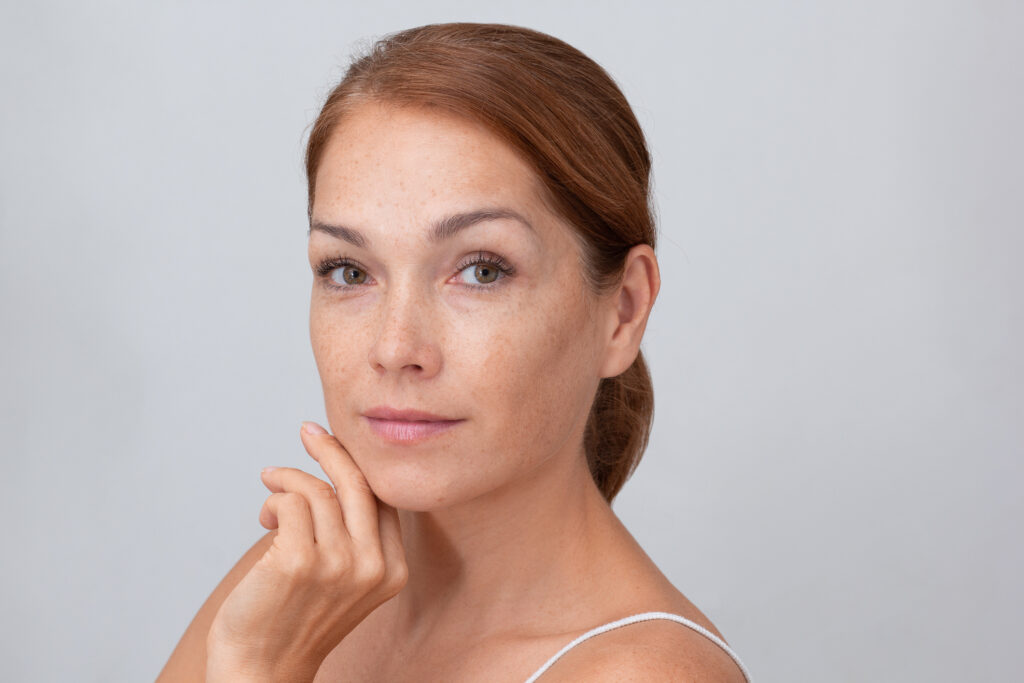
Understanding the difference between brown spots and melasma is essential to choosing the right skin pigmentation treatment. Sun spots and age spots often result from cumulative sun exposure and tend to appear as more distinct pigment areas. Melasma more often creates larger patches of discoloration and can be influenced by sunlight, visible light, hormonal changes, pregnancy, and certain medications.
Farrell Laser & Aesthetic Medicine Center offers laser-based solutions for several types of red and brown pigmentation. Dr. Deborah Farrell specializes in laser and aesthetic medicine and is a Fellow of the American Society of Laser Medicine and Surgery. She and her nurse treat brown spots at the practice in Mechanicsburg, PA.
How Are Brown Spots Different From Melasma?
Many isolated brown spots develop after repeated sun exposure. They often appear on areas that receive years of UV exposure, including the face, hands, chest, shoulders, and neck.
Melasma tends to form broader brown or gray-brown patches, especially on the face. Sunlight can darken it, and hormonal changes can contribute. Melasma may also return after it fades, making ongoing sun protection crucial.
Because several pigmentation conditions resemble one another, identifying what’s causing your discoloration is an important part of selecting care.
Why Can the Laser Choice Be Different?
Farrell Laser & Aesthetic Medicine Center uses several laser systems for pigmentation concerns:
- MedLite®: Treats issues like sun damage, melasma, and uneven pigment.
- PicoSure™: Improves pigmentation changes while stimulating collagen production to revitalize the skin.
- Iriderm: Treats concerns including age spots, dark spots, redness, and visible blood vessels.
That doesn’t mean the same device or settings make sense for every dark spot. Skin tone, pigment depth, the cause, and the area involved all influence which option you consider.
Melasma, in particular, often calls for added caution. In addition to daily sun protection, this may include medication, with laser or light therapy added in some cases. Because melasma can be persistent and sensitive to external triggers, choose a treatment plan carefully.
Why Sun Protection Still Matters
UV exposure can darken both sun-related spots and melasma. Melasma may also worsen with visible light, particularly in darker skin tones. Broad-spectrum sunscreen, shade, protective clothing, and consistent sun habits help limit new or recurrent discoloration.
Find the Right Pigmentation Care in Mechanicsburg, PA
A dark spot’s appearance alone doesn’t always tell you what caused it. Dr. Deborah Farrell and Farrell Laser & Aesthetic Medicine Center can evaluate your pigmentation and discuss suitable solutions in Mechanicsburg, PA. Call 717-732-9000 to arrange an appointment.